
REFLECTION
By Mountain and Valley
The ‘mountain’ has several meanings in the Bible.

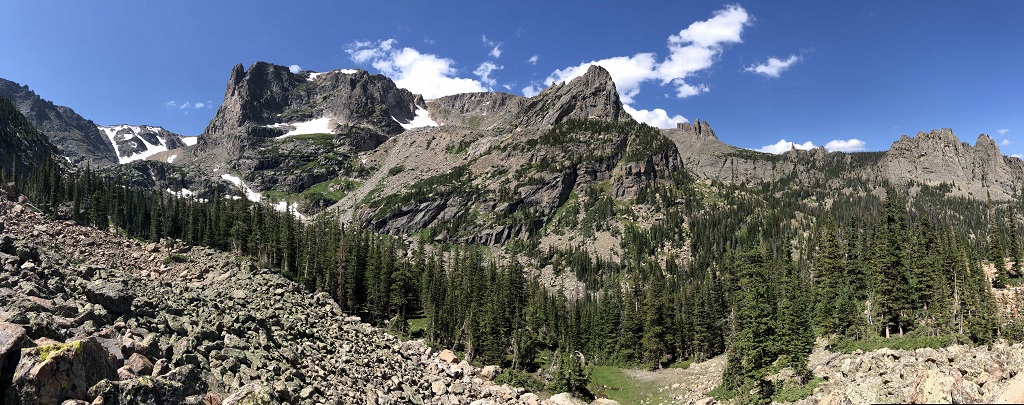
First of all, the mighty mountains are seen as a clever example of God’s creative power.
In his hand are the depths of the earth, the heights of the mountains are his also.
You set the earth on its foundations, so that it shall never be shaken. You cover it with the deep as with a garment; the waters stood above the mountains. At your rebuke they flee; at the sound of your thunder they take to flight. They rose up to the mountains, ran down to the valleys to the place that you appointed for them. You set a boundary that they may not pass, so that they might not again cover the earth. You make springs gush forth in the valleys; they flow between the hills.
From your lofty abode you water the mountains.
He looks on the earth and it trembles, He touches the mountains and they smoke.
He covers the heavens with clouds, prepares rain for the earth, makes grass grow on the hills.
Praise the Lord from the earth (…) mountains and all hills.

More explicitly religiously, in the Bible the lofty formation of mountains symbolises God, ‘the Sublime’. Admittedly, from a more philosophical approach, the symbolic term ‘DEPTH’ might be more suitable to grasp the Mystery ‘God’. God, as the deep sense of everything. In primordial symbolism, however, one uses the more visible, spatial term ‘exalted’ and speaks religiously of God as ‘the Sublime’ (Arabic ‘Allah’) or – formerly more than today – the Supreme. ‘Height’ stands first and foremost for ‘transcendence’: God who transcends us.
That is why – not only in the biblical tradition – the mountain is the perfect place to meet ‘the Supreme’. The mountain therefore stands for God’s presence and power, and also the ‘kingdom of God’.
Your righteousness is like the mighty mountains.
My soul is cast down within me; therefore I remember you from the land of Jordan and of Hermon, from Mount Mizar.
By your strength you established the mountains; you are girded with might.
May the mountains yield prosperity for the people, and the hills, in righteousness.
I lift up my eyes to the hills: from where will my help come?
As the mountains surround Jerusalem, so the Lord surrounds his people, from this time on and forevermore.
In the historical Bible stories, many significant events take place on the mountain, ‘in God’s presence’, especially with the greatest men of God such as Abraham, Moses and Jesus.
Did Abraham not go up the mountain to sacrifice his son Isaac? But on that mountain, the Moriah, he was also given the insight that the one true God is not served by human sacrifice, as was the general religious belief until then.
Moses too ascended the mountain to receive the Ten Commandments as a moral signpost. Or how natural conscience is interpreted as a gift from God.
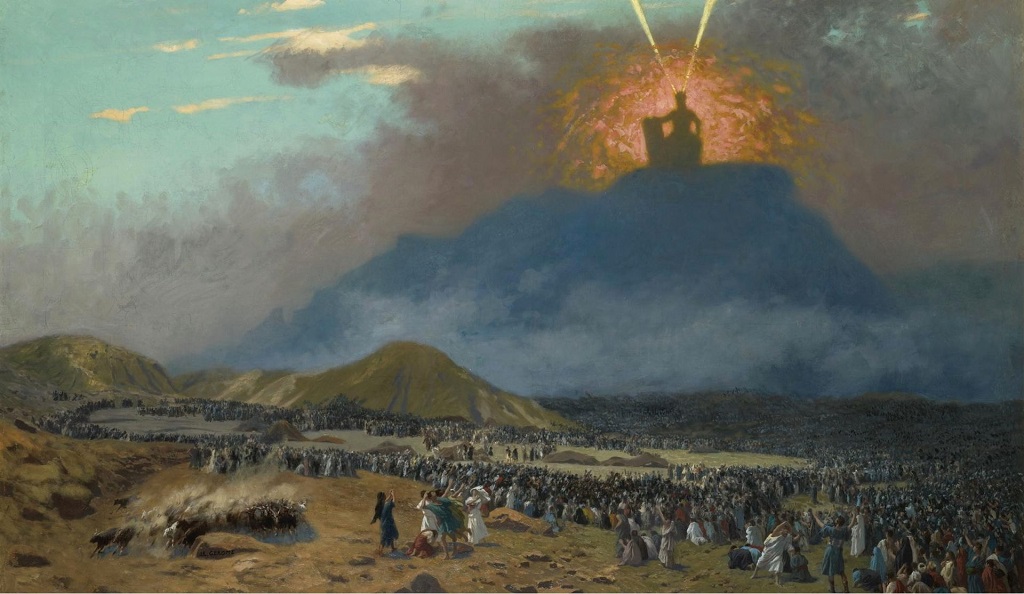
Moses ascended the mountain towards God. On the third day, early in the morning, there was thunder and lightning. A dense cloud hung over the mountain, a mighty trumpet sounded, and all the people in the camp trembled with fear. For Yahweh had descended on Sinai, on the top of the mountain. And Yahwe called Moses to the top of the mountain, and Moses went up. (Exodus 19:3.16.20)
It is not surprising that Jesus’ most important speech is called ‘the Sermon on the Mount’. (Mt. 5:1-12).
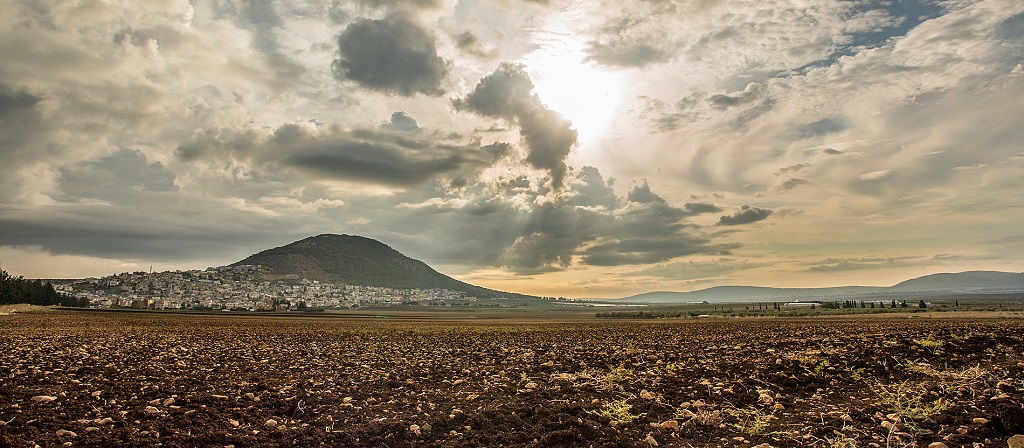
His cross stood on the (small) Mount Calvary, just outside Jerusalem, while his divine nature had previously been revealed on Mount Thabor (Mt. 17:1-13).
And his ascent to God in heaven, yes indeed: on a mountain: the Mount of Olives. (Hand. 1:9-12).
More relatively, the mighty height stands for ‘great nation’, in other words: for those elected by God.
When the Almighty scattered kings there, snow fell on Zalmon. O mighty mountain, mountain of Bashan; O many-peaked mountain, mountain of Bashan! Why do you look with envy, O many-peaked mountain, at the mount that God desired for his abode, where the Lord will reside forever?
A high mountain is of course also suitable as a watch post to get a better view of the whole. ‘Closer to God’, you also get a different view of what humanity is.
„Six days later, Jesus took with him Peter and James and his brotherA male religious who is not a priest. John and led them up a high mountain, by themselves. And he was transfigured before them“
And in the spirit he carried me away to a great, high mountain and showed me the holy city Jerusalem coming down out of heaven from God.
However, the mountain is also seen – understandably from the experience of transport – as an obstacle.
The mountains melt like wax before the Lord.
The mountains skipped like rams, the hills like lambs. Why is it, O sea, that you flee? O Jordan, that you turn back? O mountains, that you skip like rams? O hills, like lambs?
Bow your heavens, O Lord, and come down; touch the mountains so that they smoke.
A voice cries out: “In the wilderness prepare the way of the Lord, make straight in the desert a highway for our God. Every valley shall be lifted up, and every mountain and hill be made low; the uneven ground shall become level, and the rough places a plain.
However, for those who believe, trust: no obstacles are too great.
Jesus told them, “If you have faith the size of a mustard seed, you will say to this mountain, ‘Move from here to there,’ and it will move.”
I am against you, O destroying mountain, says the Lord, that destroys the whole earth; I will stretch out my hand against you, and roll you down from the crags, and make you a burned-out mountain.
